
How to Find a High-Quality Tour Guide for Luxury Travelers in Japan: Why So Few Truly Exist
Updated: Jul 22
Why do the most experienced travel companies in Japan reserve their best guides months before an itinerary is even confirmed? This article examines why guides capable of serving luxury travelers remain so scarce — and what to look for before entrusting one with your most important clients.

Table of Contents
Introduction
Japan has no shortage of people who can guide a tour. What remains remarkably scarce are guides whom travel companies can confidently assign to their most discerning clients.
For luxury travel agencies, DMCs, high-end hotels, and travel advisors, finding the right guide has become one of the industry's greatest challenges. During peak seasons such as cherry blossom and autumn foliage, experienced private guides are often reserved months in advance — sometimes before a client's itinerary is even confirmed, with companies accepting the financial risk simply to guarantee quality.
This reflects a structural reality, not a temporary shortage. Japan has many knowledgeable, licensed, bilingual guides. Yet guides who combine deep cultural understanding, professional judgment, flexibility, and the ability to serve intellectually curious luxury travelers remain surprisingly rare.
For today's luxury traveler, the guide is the person who transforms access into understanding, places into stories, and experiences into lasting memories — a shift reflected in Japan's own tourism policy, where the Japan Tourism Agency now devotes an entire chapter of its official guide training textbook to serving high-value travelers.
This article is written for international travel agencies, DMCs, luxury travel advisors, and high-end hotels seeking guides who can confidently represent both their own brand and Japan's cultural heritage. Drawing on official publications from the Japan Tourism Agency and JNTO, together with EDO KAGURA's experience recruiting, training, and developing cultural guides, we examine why exceptional guides have become so scarce and what truly distinguishes them from the rest.

1. Luxury Travel in Japan Depends on More Than Exclusive Access
For years, luxury travel was defined largely by exclusivity — prestigious hotels, Michelin-starred dining, private cars, access to places most visitors could not enter. These still matter. But today's luxury travelers increasingly want to understand the people, history, and ideas that make those experiences meaningful, not simply collect them.
Japan's Tourism Agency captures this shift by distinguishing Classic Luxury travelers, who value comfort, prestige, and flawless service, from Modern Luxury travelers, who place greater weight on authenticity, intellectual curiosity, and experiences that cannot be replicated elsewhere. Many of today's high-value travelers belong to this second group: less interested in visiting famous places than in understanding why those places matter.
A private tea ceremony becomes far more meaningful once guests understand the philosophy and etiquette behind it. An evening with geisha is transformed by understanding the social history that sustains Kagurazaka's hanamachi today. The deeper the cultural context, the richer the experience — and this is where an exceptional guide makes the difference.
Access may open the door. The right guide determines what the traveler discovers beyond it.
An outstanding guide connects seemingly unrelated ideas, reveals the stories behind traditions, and helps guests see Japan through a different lens. For luxury travel companies, this matters enormously: the finest hotels and itineraries can lose much of their value if the guide cannot provide the depth, judgment, and warmth discerning travelers expect. The guide is not one component of a luxury itinerary — often, they determine whether a journey becomes merely enjoyable or genuinely unforgettable.

2. What Luxury Travelers Actually Expect from a Guide
This is not simply our own observation — it's reflected in Japan's official tourism research and strategy.
The Japan Tourism Agency defines high-value travelers as those spending over ¥1 million per trip (excluding airfare), but also by their motivations: strong intellectual curiosity and a desire for authentic experiences that deepen their understanding of a destination's history and culture, rather than simply visiting famous attractions. This is why the agency now devotes an entire chapter of its official guide training text to serving these travelers — requiring guides to interpret culture with depth, build trust through genuine connection, adapt flexibly, communicate closely with travel companies, and continually develop their knowledge.
These priorities match a separate Agency survey of 1,897 international visitors. Asked what knowledge they considered "Very Important" in a guide:
The origins and background of cultural experiences — 69%
The historical background of historical experiences — 67%
Tourism resources at the destination — 52%
Food and dining — 51%
Nature experiences — 48%
(Including "Somewhat Important," cultural and historical background rise to roughly 90%.)
Personality mattered just as much. The top-rated qualities: a friendly manner (78%), being easy to understand (75%), and being approachable (74%) — each exceeding 90% combined with "Somewhat Important."
Travelers aren't looking for guides who simply possess information. They're looking for guides who interpret culture while building genuine relationships. As smartphones and AI have made facts instantly accessible, this distinction has only grown more important — dates and names can be found in seconds; context, understanding, and human conversation cannot. This is why selecting the right guide has become one of the most important decisions a travel company can make.
3. How to Find a High-Quality Tour Guide for Luxury Travelers in Japan
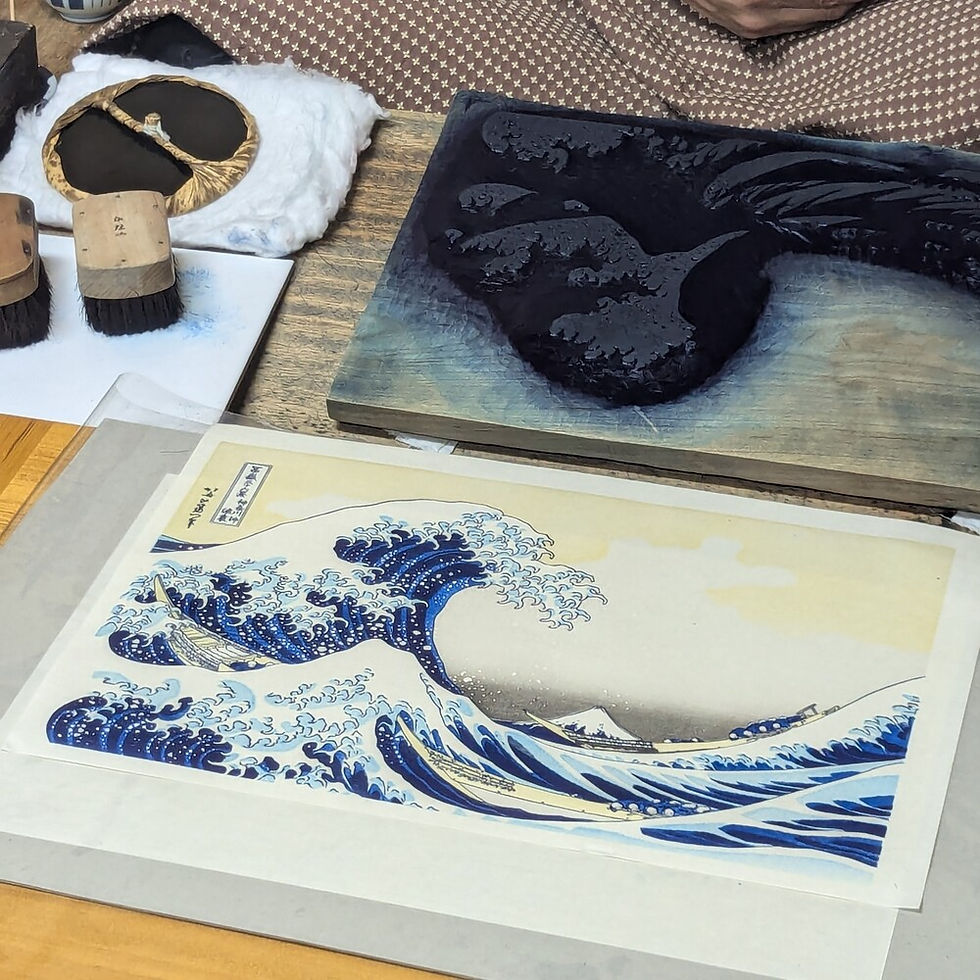
Language ability, reviews, and qualifications are useful indicators, but rarely tell the whole story. Based on the Tourism Agency's recommendations and our own experience, we suggest looking beyond surface-level credentials.
Can they explain the "why," not just the facts? Rather than "this temple was built in the seventeenth century," an exceptional guide explains why Buddhist temples became centers of education and why many Japanese people still visit them despite describing themselves as non-religious. Facts introduce a destination; context makes it memorable.
Where does their knowledge come from? Books and academic research provide an essential foundation, but the most valuable insights often come from conversations with artisans, geisha, temple staff, tea masters, and local historians — people who continue to preserve Japan's living traditions. A useful question to ask a guide company: how do your guides continue learning after they begin guiding?
Can they adapt to different travelers? Some luxury travelers want deep historical detail; others are drawn to architecture, food culture, or quiet observation. Excellent guides adjust both the depth and style of their explanation to each traveler — flexibility isn't just about changing an itinerary, it's the ability to change the conversation.
Do they understand luxury hospitality? Approachable without being overly familiar, knowledgeable without lecturing, attentive without being intrusive. The best guides know when to speak and when to let a place speak for itself.
Can they work as part of a professional travel team? An excellent guide communicates clearly before the tour, responds calmly when plans change, and understands that protecting the travel company's relationship with its client is part of their job.
Do they have genuine relationships within the local community? Being based somewhere doesn't make a guide a local expert — the real question is whether they've earned the trust of the people who sustain the culture there.
Choosing a guide for luxury travelers means evaluating a person's ability to interpret culture, exercise judgment, and represent both Japan and your own brand — qualities that often determine whether an itinerary is merely well organized or genuinely unforgettable.

4. Why Licenses, Reviews, and Language Skills Are Not Enough
Most travel companies naturally start by looking at qualifications, reviews, and language ability. All three are valuable — none tells the whole story.
Japan's National Government Licensed Guide Interpreter qualification is one of the country's most respected credentials, requiring broad knowledge of Japan's history, geography, and culture alongside advanced language ability. It is especially valuable for guides who accompany travelers across multiple cities or regions throughout Japan.
But luxury travel increasingly demands something different. A guide may have outstanding nationwide knowledge while having only limited familiarity with a particular neighborhood or artisan community — and another guide may have spent years building deep expertise in one region that no national exam can measure. Breadth and depth are different strengths.
Reviews, too, have limits: a five-star rating rarely reveals whether a guide can respond thoughtfully to unexpected questions or collaborate smoothly with a luxury hotel concierge. And fluency is not the same as interpretation — many people can explain facts accurately in English; far fewer can explain complex cultural ideas naturally and adapt them to different travelers. Price, similarly, is not a reliable indicator of quality.
Ultimately, luxury travel companies are selecting the person who will represent both Japan and their own brand in front of a valued client — a decision that requires looking past qualifications, reviews, and price to the qualities that are hardest to measure but matter most: cultural interpretation, judgment, adaptability, warmth, and continuous learning.

5. Japan Has Thousands of Licensed Guides. Why Are the Right Ones Still So Hard to Secure?
According to the latest Japan Tourism Agency statistics, there are 26,848 registered National Government Licensed Guide Interpreters nationwide — 8,871 in Tokyo alone. On paper, reassuring numbers.
But the challenge isn't finding a guide — it's finding the right one. Every added requirement narrows the pool: availability on the required dates, the client's preferred language, experience in the specific destination, comfort with intellectually curious travelers, the ability to adapt when plans change, and the discretion to represent another company's brand.
Language narrows it further. Among registered guides, roughly 71.9% are qualified in English, compared to just 4.2% in French, 3.6% in Spanish, and 2.4% in German — and these figures describe registrations, not how many are actively working, available in peak season, or experienced with luxury travelers.
The number of registered guides is not the same as the number a travel company can confidently assign to a high-value client. One measures capacity. The other measures confidence. The real challenge isn't choosing from thousands of names — it's knowing which guide can confidently represent your client, your itinerary, and your brand.

6. Why Exceptional Guides Rarely Remain Available on the Open Market
If finding exceptional guides is this difficult, why don't companies simply book them as needed? In practice, that's often no longer possible. During Japan's busiest seasons — cherry blossom in spring, foliage in autumn — the guides who consistently serve luxury travelers are frequently reserved months ahead. For many companies, the challenge is no longer choosing between excellent guides; it's securing one before someone else does.
As demand rises, agencies and DMCs naturally return to guides they already trust — and those guides become harder to book. The result is a market where the most reliable guides are often committed long before their availability is visible to the wider industry. This becomes even more pronounced with specific languages or specialist themes: finding a French- or German-speaking guide is one task; finding one who also has deep cultural expertise and is free on the required date is another entirely.
Many experienced travel companies now plan around guide availability rather than treating guide assignment as the final step. Exceptional guides certainly exist — the challenge is matching the right guide with the right traveler, subject, language, and date. In luxury travel, availability itself has become part of quality.

7. Why Developing Guides Matters More Than Simply Finding Them
Many outstanding freelance guides work throughout Japan and play an essential role in the industry. The challenge for companies seeking consistent quality across multiple departures, languages, and seasons is that relying solely on the open market makes consistency hard to achieve — every guide brings different strengths, and quality can vary significantly from one assignment to the next.
Achieving real consistency requires more than a large freelance database. It requires a shared philosophy, shared standards, and shared expectations of what excellent guiding looks like. This is why we believe exceptional guides are not simply found — they are developed.
At EDO KAGURA, we've chosen to invest in building guides rather than relying exclusively on the market to produce them, aiming to develop people who can interpret Japanese culture with depth and keep learning throughout their careers. This approach also changes who applies: rather than attracting people looking for occasional guiding work, we attract bilingual and trilingual professionals genuinely fascinated by Japanese history and culture. Because our recruitment draws far more applicants than we can hire, we can select for curiosity, humility, and empathy — not just language and knowledge.
Our advantage doesn't begin with training. It begins with selection. Training builds on that foundation, creating a team that shares not just knowledge but a common understanding of what travelers value most. Travelers may remember different stories — what they should never experience is a different standard.
8. How We Select Guides for Knowledge, Character, and Judgment
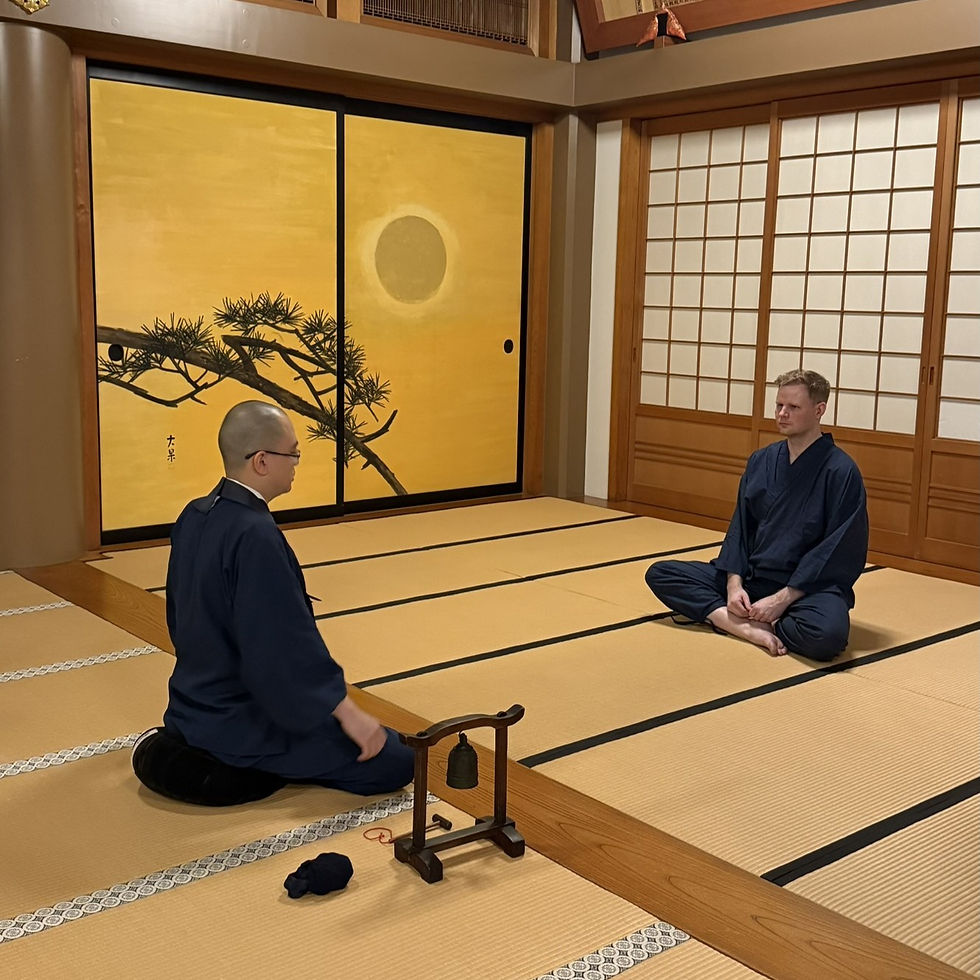
Our recruitment process typically takes two to three months. We believe becoming a guide capable of serving luxury travelers cannot be rushed. It includes:
Application and résumé review
Aptitude and personality assessment
A one-to-two-hour interview
A traditional culture knowledge examination
Field training through Kagurazaka led by our founder
A practical guiding assessment, in which the candidate leads the tour
Hiring upon successful completion of the process
Ongoing professional development after joining
Knowledge can be tested in writing; communication can be observed in an interview. But practical judgment — whether a candidate can listen carefully, admit what they don't know, and treat artisans and temple staff with genuine respect — only becomes visible when guiding real people. These qualities rarely appear on a résumé, yet they often determine whether a traveler remembers a guide with appreciation years later.
Luxury travelers present particular challenges: some ask highly detailed questions, others prefer conversation over formal explanation; some want to move quickly, others want thirty minutes on a single object. An exceptional guide reads the traveler rather than following a script — knowing when to explain, when to listen, and sometimes, when saying less creates a better experience. Luxury service is often defined not by saying more, but by understanding more.
9. How Our Guides Continue Learning Beyond the Classroom
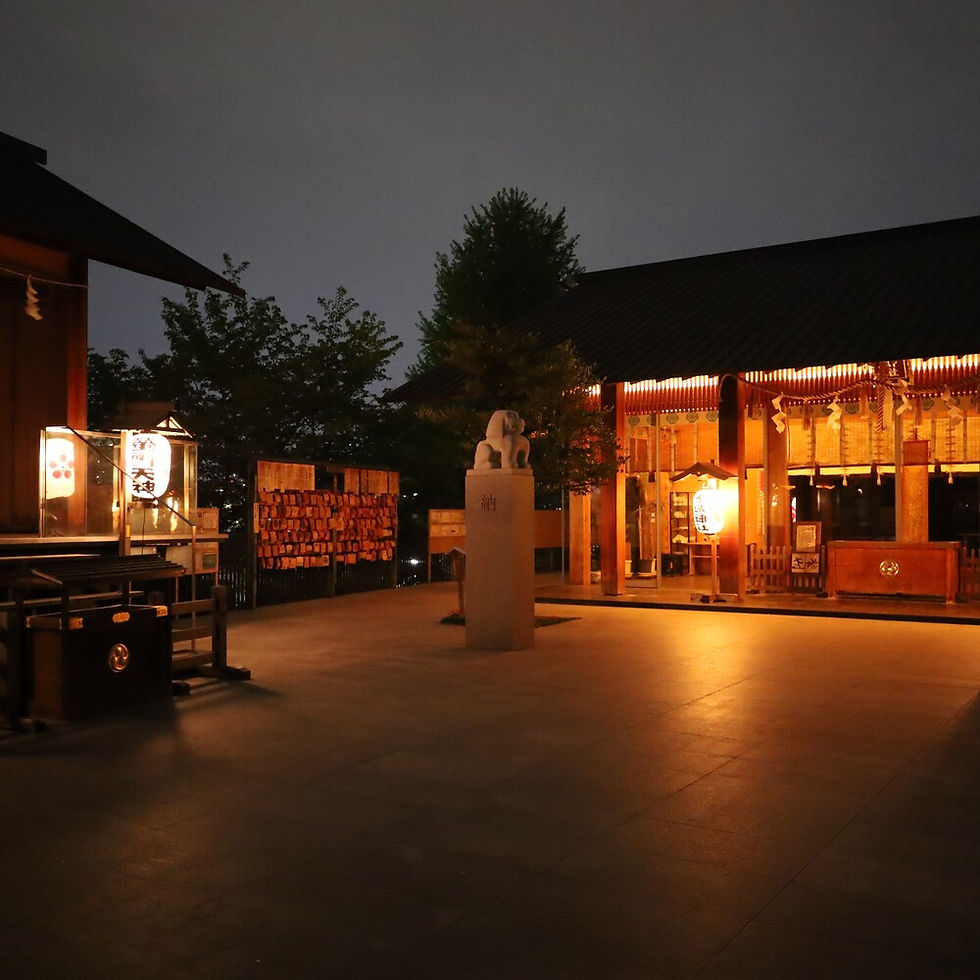
No guide finishes learning after passing an exam. Traditional culture continues to evolve through the people who practice it every day, so our guides keep learning through ongoing conversations with geisha, artisans, temple staff, chefs, and tea practitioners. A guide may hear a new story from an artisan mid-tour, or a geisha may explain how a custom has changed over the past decade — knowledge that's then shared across our whole team.
Guiding → Listening → Learning → Sharing → Guiding again. Every tour creates a new opportunity to learn, and every conversation improves the next one.
Our founder follows the same philosophy, personally participating in cultural experiences whenever possible — not simply to monitor quality, but to keep learning directly from the people who carry these traditions forward. Books provide the historical foundation, but only practitioners can explain why they still devote their lives to a tradition, and what they hope future generations will understand. A thoughtful question from a traveler often becomes the starting point for our own further research — learning moves in both directions, and for us, the cycle never ends.

10. The Difference Between Information and Cultural Interpretation
The most common question we hear from travel professionals is: "What makes your guides different?" Our answer: it's not the amount of information they provide, but the way they connect information into meaning.
Anyone can explain that a temple was built in a particular year. Those facts matter, but rarely by themselves change how a traveler understands Japan. Consider a question many travelers ask: "Why does Japanese food taste so good?" There's no single answer — fresh ingredients, fermentation, seasonality, and craftsmanship all contribute. But our conversations often extend to Tofu Hyakuchin, a bestselling cookbook published in Edo in 1782, and what its popularity suggests about literacy, printing technology, and the spread of culinary knowledge beyond professional kitchens.
Or: "Why are Japan's streets so clean?" This isn't fully explained by simply saying that Japanese people are fond of cleanliness. We think through several layers of background together with travelers — ideas of purity in Shinto, the cooperative habits of rice cultivation, Edo-era public health systems, and everyday customs of consideration for shared spaces. None of these alone fully explains modern Japan; together, they help travelers see how history, religion, and daily life continue to influence one another.
Information tells people what they're seeing. Interpretation helps them understand why it matters — and that's often the moment sightseeing becomes genuine cultural discovery.

11. Why Storytelling Matters in Luxury Travel
This growing emphasis on interpretation is increasingly reflected in Japan's national tourism strategy itself: in recent years, the Tourism Agency has placed greater weight on communication and storytelling in its professional training materials for guides.
Today's discerning travelers rarely seek information alone — many have already read and researched extensively before arriving. What they can't easily find online is thoughtful conversation with someone who connects places, history, and contemporary life into a coherent narrative.
Storytelling here doesn't mean dramatizing history or simplifying it into anecdotes — it means revealing the relationships between facts. A date becomes meaningful when tied to a turning point; a craft becomes memorable when connected to the people still practicing it. The most memorable itineraries are rarely those with the greatest number of famous places — they're the ones that leave travelers seeing those places differently. Luxury travel is ultimately measured not only by where a traveler goes, but by how deeply they understand what they encounter — and that understanding is built through stories that reveal why the facts matter.

12. What Travel Companies Should Ask a Guide Partner Before Entrusting a Luxury Client
A guide represents not only themselves, but the travel company that entrusted them with its client. Before assigning one, consider asking:
How are your guides selected — based on availability, or through a structured recruitment process?
Beyond language, what qualities do you assess — communication, judgment, empathy?
How do your guides develop expertise — mainly books, or direct learning from artisans and cultural practitioners?
Is there an ongoing system for continuous learning and feedback?
How are guides matched to clients — by personality, pace, and specialty, or simply availability?
How do you prepare for unexpected changes during a tour?
How do you communicate with travel partners — DMCs, hotels, chauffeurs — before, during, and after?
No company will answer these identically, but asking them reveals far more about guiding quality than comparing prices or star ratings.

13. Why Multilingual Capability Matters in Luxury Travel
English remains the primary language of inbound tourism, and roughly 71.9% of Japan's Licensed Guide Interpreters are registered in English — compared to just 4.2% in French, 3.6% in Spanish, and 2.4% in German. For many luxury travelers, discussing Japanese culture in their native language creates a very different experience: nuances are easier to grasp, questions become more detailed, and conversation flows more naturally.
At EDO KAGURA, we currently provide guiding in English, French, German, and Spanish, depending on availability and subject matter. For us, multilingual capability isn't simply translation — it's making cultural interpretation accessible in the language travelers feel most comfortable thinking and questioning in.

14. What Our Travel Partners and Guests Have Experienced
Many of our partner agencies continue working with us because they know what level of guiding their clients can expect. Recent feedback includes:
"Akiko gave us an amazing personal tour of classic Tokyo neighborhoods, woven through with history and culture."
"Mayumi was awesome! Extremely knowledgeable and personable with excellent language skills."
"This experience will be one of the highlights of our whole trip."
"This was the best tour we have been on in Tokyo."
These comments matter to us not because they praise individual guides, but because they reflect the qualities we work to cultivate across our entire team.

15. The Right Guide Is One of Japan's Rarest Luxury Travel Resources
Japan offers an extraordinary wealth of cultural experiences — historic neighborhoods, traditional arts, master artisans, exceptional cuisine, living traditions. But none of these speaks for itself; someone must help travelers understand what they're seeing. That's the guide's role.
Japan has thousands of professional guides. But those who combine cultural depth, professionalism, adaptability, warmth, multilingual communication, and ongoing learning remain comparatively rare — especially in luxury travel, where every interaction shapes the traveler's overall impression of Japan. The question isn't simply how to find a guide. It's how to find the right guide for the right traveler.
The guide is not an accessory to the journey. The guide is often the person who determines whether access becomes understanding — and whether an itinerary becomes a lifelong memory.

16. Partnering with EDO KAGURA
If your organization designs bespoke journeys for discerning travelers visiting Japan, we would be delighted to explore how we might support your clients.
EDO KAGURA partners with international travel agencies, luxury tour operators, DMCs, luxury travel advisors, and high-end hotels seeking private guides who combine deep cultural knowledge with exceptional hospitality. Depending on language, subject, destination, and availability, we can provide private guides for bespoke Tokyo itineraries, traditional cultural specialists, geisha and sumo experiences, walking tours, and guide support for existing itineraries — in English, French, German, and Spanish.
Rather than simply assigning an available guide, we seek to match each traveler with the person best suited to their interests, expectations, and style of travel.


Comments