
A SHOGUN Morning: The Tokyo Cultural Experience Your Most Discerning Clients Have Never Been Offered — Until Now

Your clients have seen Kyoto. They have done the Tsukiji tour. They have attended a tea ceremony somewhere along the way.
What they have not done — and what almost no visitor to Tokyo ever does — is spend a quiet, unhurried morning in Kagurazaka, in the company of an imperial wagashi master and one of Japan's rarest performing artists, in a neighborhood that shaped the very idea of Edo culture.
That is what we are offering. And we would like to offer it to your clients.

What This Experience Is
The SHOGUN Cultural Experiences is a curated 150-minute morning program set in Kagurazaka — one of Tokyo's most historically layered neighborhoods, and one that almost no international visitor ever discovers independently.
It brings together three distinct cultural encounters into a single, seamlessly composed morning:
A guided walk through the streets of Kagurazaka, framed through the lens of Edo-period history and the legacy of the Tokugawa shogunate — led by a dedicated guide specializing in traditional Japanese culture, with full English interpretation throughout.
A wagashi workshop and tea ceremony at Fufumian, the private annex of Baikatei — a space usually closed to the public — led by Takeshi Inoue, a certified Tokyo Meister, designated Outstanding Wagashi Artisan, and supplier to the Imperial Household.
A live kokyu performance and hands-on session with Daisuke Kiba — one of Japan's foremost players of this rare Edo-period bowed instrument, a contributor to the Emmy Award-winning Hollywood drama SHOGUN, and a guest artist in concerts by Grammy Award-winning singer Alicia Keys.
The Tokyo Cultural Experiences program is limited to eight guests per session, ensuring an intimate and unhurried encounter with each practitioner. It concludes at 10:00 AM — timed precisely for guests departing on afternoon international flights, or for those who wish to continue exploring Kagurazaka's exceptional concentration of traditional arts and historic establishments.

Why This Stands Apart from Other Cultural Experiences in Tokyo
It is genuinely rare — not packaged to feel rare
Many Tokyo cultural offerings are designed for volume: large groups, standardized formats, practitioners who host dozens of visitors per week. This program is structured around genuine access. Takeshi Inoue and Daisuke Kiba are not tourism professionals — they are cultural masters who have agreed to open their space and their craft to a small number of guests. The difference is felt immediately, and your clients will know it.
It solves the departure-day problem elegantly
For guests on international itineraries — particularly those with flights departing between 16:00 and 18:00 — the final morning in Tokyo is typically wasted. This experience transforms it into the most memorable moment of the trip, concluding early enough to allow a relaxed lunch, unhurried shopping in Kagurazaka's century-old boutiques, and a comfortable transfer to Narita or Haneda.
It is supported by a narrative your clients already know
The global success of the SHOGUN drama has created genuine curiosity about Edo-period culture among high-net-worth travelers worldwide. This experience answers that curiosity with substance — not a costume, not a theme park, but direct engagement with living practitioners of the arts that defined that era. For clients who watched SHOGUN and wished they could step inside its world, this is as close as it gets.
It positions your offering above the competition
A wagashi class. A tea ceremony. A temple visit. These are available everywhere. What is not available anywhere else in Tokyo is this particular combination — a five-senses cultural ensemble, in this neighborhood, with these two practitioners, at this level of intimacy. Recommending this experience to your clients signals that your curation goes beyond the expected.

Designed for Clients Who Expect Flawless Execution
We understand that for luxury travel professionals, the greatest risk is not the experience itself — it is the unexpected: a language barrier at a critical moment, an undisclosed ingredient, a privacy concern. We have addressed each of these directly.
English interpretation throughout
A dedicated guide specializing in traditional Japanese culture accompanies the entire program, providing full English interpretation at every stage — from the historical walk to the wagashi workshop and the kokyu session. Your clients will not miss a word, a nuance, or a moment.
Vegetarian & vegan friendly
The wagashi crafted during the workshop are made entirely from plant-based ingredients. No animal products are used at any stage. The experience is fully suitable for vegetarian and vegan guests without any modification or compromise to the program.
Nut-free
All ingredients used in the wagashi workshop are nut-free. Guests with nut allergies can participate with complete confidence.
Privacy assured — from the June/July sessions onward
The current June and July sessions accommodate up to eight guests in a small-group format. From our full launch onward, the program is available as a fully private tour, bookable exclusively for your client's party. No other guests. No shared space. Complete discretion — precisely the standard your clients expect.

The Practitioners
Takeshi Inoue — Wagashi & Tea Master
Fourth-generation head of Baikatei, one of Tokyo's most respected wagashi establishments. Certified Tokyo Meister — a distinction awarded by the Governor of Tokyo to craftsmen of the highest order. Designated Outstanding Wagashi Artisan, the field's top honour. Official supplier to the Imperial Household. Holder of the tea name "Sogo," conferred by Grand Master Zabosai of the Urasenke school.
He is not merely a confectioner. He is one of the custodians of a living cultural tradition.

Daisuke Kiba — Kokyu Virtuoso
One of Japan's foremost performers of the kokyu — a bowed string instrument from the Edo period, extraordinarily rare in the modern world. Regular performer at the National Theatre. Recognized by the Agency for Cultural Affairs Arts Festival. Frequent NHK presence. Contributor to the SHOGUN soundtrack. Solo guest artist for Alicia Keys.
His artistry bridges classical Edo tradition and contemporary global audiences — a combination that resonates powerfully with internationally minded guests.

An Invitation to Experience It First — at an Exceptional Price
June & July 2026: A Subsidized Preview Opportunity
The June 21 and July 12 sessions are offered at JPY 17,000 per person (tax included).
We extend this as a genuine invitation: before recommending this experience to your clients, we encourage you to try it yourself — or to bring one of your travelers to a June or July session.
See the program in person. Meet the practitioners. Assess the quality of interpretation, the atmosphere of Fufumian, the impact of the kokyu. Form your own judgment — at a price that makes this exploration entirely viable.
Once the subsidized sessions conclude, the program will transition to its full pricing as a private tour offering. At that point, you will be in the ideal position to recommend it to your clients with complete confidence, knowing precisely what they will experience and why it is worth it.

Scheduled Dates & Custom Arrangements
Subsidized preview sessions:
- Sunday, June 21 — 7:30 to 10:00 AM
- Sunday, July 12 — 7:30 to 10:00 AM
Capacity: Maximum 8 guests per session
Price: JPY 17,000 per person (tax included) — subsidy applied
Meeting Point: JR Iidabashi Station (West Exit)
Private Sessions Available Upon Request — From Full Launch Onward
Beyond the subsidized dates, we welcome inquiries for **fully private sessions** tailored to your clients' itineraries and schedules. Whether you are planning a bespoke program for a small party of VIP travelers, a corporate incentive group, or a multi-day cultural immersion in Kagurazaka, we are glad to discuss what is possible.
We understand that the most discerning clients rarely fit standard schedules. Our approach is to find the arrangement that works — not to fit your clients into ours.
After the Experience — Extending the Morning
For guests who wish to continue after 10:00 AM, Kagurazaka offers an exceptional range of additional cultural encounters — each one a natural extension of the morning's themes, and each one available to incorporate into a broader program upon request:
Kumihimo braiding at Domyo — the ancient art of interlaced silk cord, once used to secure samurai armour.
Zen meditation at Denchuji Temple — a guided zazen session in genuine contemplative surroundings.
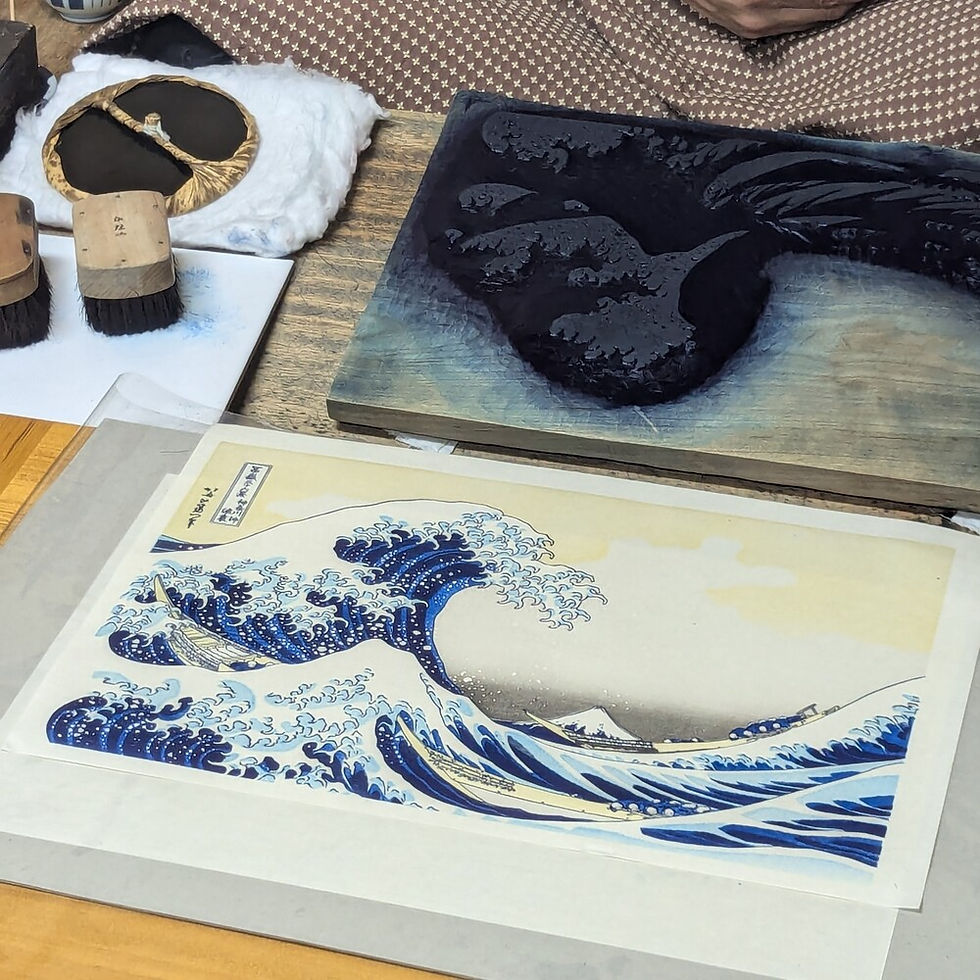
Ukiyo-e woodblock printing at Takahashi Kobo — hands-on printmaking using traditional Edo-period tools and techniques.
Noh experience at Yarai Noh Theater — a Registered Tangible Cultural Property, offering visits and experiential programs on one of Tokyo's few remaining classical Noh stages.
Geisha banquet lunch at Shimakin (from 11:00 AM) — a private kaiseki-influenced lunch with Tokyo's remaining geisha, in a celebrated Kagurazaka ryotei setting.
We are happy to arrange any combination of these as part of a full-day Kagurazaka program for your clients.
A Note on Partnership
We work with a select number of luxury travel partners whose client profiles align with the nature of this experience. If you are interested in discussing how we might work together — including preferred partner arrangements, advance reservation access, and group booking options — we welcome the conversation.
We believe the best partnerships are built on shared values: a commitment to authenticity, a respect for the practitioners and traditions we represent, and a genuine desire to offer clients something they will carry with them long after they leave Japan.
Get in Touch
We would be glad to provide a full program overview, arrange a preview visit, or discuss custom scheduling for your clients.
The SHOGUN Cultural Experiences is designed and operated by EDO KAGURA Corporation, a luxury cultural travel company dedicated to connecting discerning travelers with the authentic living heritage of Japan.
This project is supported by a grant from the Tokyo Metropolitan Government and the Tokyo Convention & Visitors Bureau for the promotion of nighttime tourism. |


Comments